
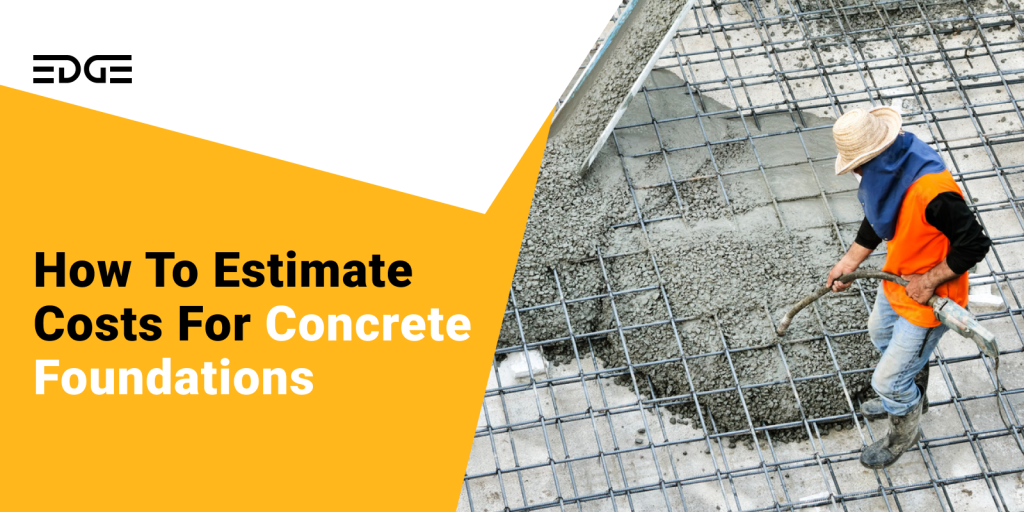
Concrete foundation cost estimation represents one of the most critical aspects of construction budgeting, yet it remains one of the most challenging to calculate accurately. The foundation literally supports your entire project, making precise cost estimation essential for both financial planning and structural integrity. Understanding the multifaceted nature of foundation costs enables contractors, builders, and property developers to create realistic budgets while avoiding costly surprises during construction.
Modern foundation construction involves accurate engineering calculations, material specifications, and labor coordination that directly impact project costs. From residential homes requiring simple slab foundations to commercial buildings demanding complex basement structures, each project presents unique estimation challenges that require systematic analysis.
Understanding Foundation Types and Cost Implications
The foundation type significantly influences overall project costs, with each system requiring different materials, labor skills, and construction timeframes. Foundation construction costs vary dramatically between slab-on-grade, crawl space, full basement, and specialized foundation systems designed for challenging soil conditions or seismic zones.
Slab foundations typically represent the most economical option. However, full basements command premium pricing due to extensive excavation, waterproofing, and structural requirements. Understanding these fundamental differences helps establish realistic budget parameters before detailed estimation begins.
Slab Foundation Cost Analysis
Foundation slab costs encompass multiple components including site preparation, vapor barriers, reinforcement materials, concrete placement, and finishing work. A typical residential slab foundation requires 4-6 inches of concrete thickness, with commercial applications often demanding 6-8 inches or more based on load requirements.
Moreover, standard residential slabs range from $4 to $8 per square foot installed, while commercial applications can reach $8 to $15 per square foot depending on reinforcement requirements and finishing specifications. These costs include basic site preparation but exclude extensive grading, utility installations, or specialized soil treatments.
Thickened edge slabs, common in areas without frost concerns, add approximately $2 to $4 per linear foot for the perimeter beam. This integrated footing system eliminates separate footing construction while providing adequate bearing capacity for typical residential loads.
Footing and Deep Foundation Pricing
Concrete footing prices depend heavily on depth requirements, soil bearing capacity, and local frost line considerations. Standard residential footings typically measure 16-24 inches wide and extend below the frost line, with costs ranging from $8 to $15 per linear foot including excavation, concrete, and basic reinforcement.
Similarly, commercial footings require engineering analysis to determine appropriate sizes and reinforcement patterns. These specialized foundations can cost $15 to $35 per linear foot, with complex designs requiring spread footings, grade beams, or pile caps commanding premium rates.
Footing and slab estimation must account for stepped footings on sloped lots, which increase concrete volume and formwork requirements. Each step typically adds 10-20% to standard footing costs due to additional forming and concrete placement complexity.
Material Cost Components
Concrete Mix Specifications
Concrete mix costs fluctuate based on strength requirements, aggregate availability, and delivery distances. Standard residential concrete (3,000 PSI) typically costs $110 to $150 per cubic yard delivered, while high-strength mixes (4,000+ PSI) range from $130 to $180 per cubic yard.
Moreover, specialty concrete mixes for specific applications command premium pricing. Fiber-reinforced concrete adds $10 to $25 per cubic yard, while air-entrained concrete for freeze-thaw protection increases costs by $5 to $15 per cubic yard. Self-consolidating concrete for complex forms can add $20 to $40 per cubic yard but reduces labor requirements.
Reinforcement Materials
Rebar material estimates require careful calculation of linear footage, weight, and grade specifications. Standard #4 rebar costs approximately $0.75 to $1.25 per linear foot, while larger #5 and #6 bars range from $1.50 to $3.00 per linear foot depending on market conditions.
Welded wire mesh provides economical reinforcement for residential slabs, costing $0.35 to $0.65 per square foot installed. Post-tensioned systems, common in commercial applications, add $1.50 to $3.50 per square foot but enable longer spans and reduced concrete thickness.
Labor Cost Analysis
Concrete labor rates vary significantly by region, project complexity, and contractor experience. Residential foundation crews typically charge $3 to $6 per square foot for labor, including forming, reinforcement placement, concrete finishing, and form removal.
However, specialized foundation work commands higher labor rates. Basement foundation pricing includes additional labor for waterproofing, drainage systems, and complex forming, often reaching $8 to $15 per square foot for labor components alone.
Commercial foundation labor ranges from $6 to $12 per square foot, reflecting the precision required for complex reinforcement patterns, architectural concrete finishes, and coordination with other trades.
Site Conditions and Additional Factors
Site-specific conditions dramatically influence foundation costs beyond standard material and labor rates. Poor soil conditions requiring soil stabilization, deep excavation, or specialized foundation systems can double or triple baseline estimates.
Rock excavation adds $15 to $45 per cubic yard depending on hardness and accessibility. Dewatering systems for below-grade construction cost $2,000 to $8,000 per month, while soil stabilization treatments range from $2 to $12 per square foot.
Basement Foundation Considerations
Basement foundation pricing has multiple specialized systems including waterproofing, drainage, and structural walls. Full basement construction typically costs $15 to $30 per square foot for basic concrete work, with waterproofing adding $3 to $8 per square foot and drainage systems contributing $5 to $15 per linear foot.
Basement walls require careful forming and reinforcement design, particularly for tall walls or challenging soil conditions. Walk-out basements add complexity for stepped wall construction and require additional engineering analysis.
Advanced Estimation Strategies
Structural foundation planning requires integration of architectural requirements, soil conditions, and local building codes. Professional estimators utilize specialized software to calculate concrete volumes, reinforcement quantities, and forming requirements while accounting for waste factors and construction tolerances.
Successful residential foundation budgets include 5-15% contingencies for unforeseen conditions such as rock encounters, utility conflicts, or weather delays. Commercial projects often require 10-20% contingencies due to increased complexity and coordination requirements.
Quality Control and Cost Management
Foundation construction represents a significant investment that directly impacts overall project success. Proper quality control during estimation and construction prevents costly repairs while ensuring structural performance throughout the building’s lifespan.
Regular cost monitoring during foundation construction helps identify budget variances early, enabling corrective action before substantial overruns occur. Weekly progress meetings and material tracking maintain project financial health while ensuring quality standards.
Technology Integration
Modern foundation estimation benefits from advanced measurement tools, 3D modeling software, and automated quantity takeoff systems. These technologies improve accuracy while reducing estimation time and human error.
GPS-guided excavation equipment and laser leveling systems improve construction efficiency while maintaining tight tolerances. These technological advantages translate into more predictable costs and improved project outcomes.
Conclusion
Accurate concrete foundation cost estimation requires comprehensive analysis of foundation type, site conditions, material specifications, and labor requirements. Success depends on thorough soil investigation, realistic contingency planning, and systematic approach to cost tracking throughout construction. By carefully evaluating each component from excavation through final finishing, project managers can develop reliable budgets that support successful foundation construction while avoiding costly surprises.
This is where Edge Estimates adds real value. With advanced estimation tools, structured workflows, and industry-proven costing models, Edge Estimates helps contractors and developers achieve pinpoint accuracy in their budgeting. Its detailed breakdowns account for material fluctuations, local labour rates, equipment usage, and site-specific variables,

